
AI-Powered Marketing Segmentation: How to Turn Customer Data into Predictive Growth Strategy
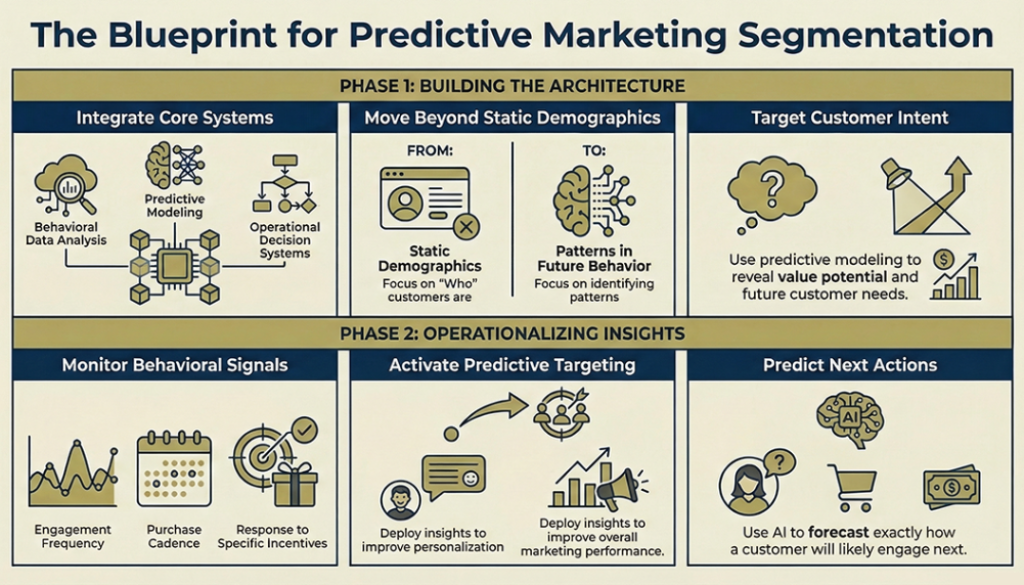
To implement AI-powered marketing segmentation effectively, organizations must integrate three core elements: behavioral data analysis, predictive modeling, and operational decision systems. These components allow marketers to move beyond static demographic segments and instead identify patterns that reveal customer intent, value potential, and future behavior.
Traditional segmentation describes who customers are. AI-driven segmentation predicts what customers are likely to do next by analyzing behavioral signals such as engagement frequency, purchase cadence, and response to incentives. In this guide, you’ll learn how modern segmentation works, why demographics alone no longer explain customer behavior, and how organizations can operationalize predictive segmentation to improve targeting, personalization, and marketing performance.
Key ideas from this guide:
- Traditional demographic segmentation explains identity but rarely predicts behavior
- Behavioral signals reveal customer intent, readiness, and momentum
- AI segmentation models identify patterns across large behavioral datasets
- Predictive segments estimate likelihood of conversion, churn, or engagement
- Continuous learning models update segments as customer behavior changes
- AI segmentation improves marketing efficiency and resource allocation
- Responsible governance is required to prevent bias and protect customer trust
Why Traditional Segmentation No Longer Predicts Customer Behavior
The core limitation of traditional segmentation lies in its reliance on static attributes such as age, income, and geography. These variables describe identity but do not explain decision-making processes. Two customers with identical demographic profiles may exhibit entirely different purchasing behavior depending on context, motivation, and timing.
Modern digital environments expose this gap clearly. Every interaction—searching, browsing, comparing products, or responding to offers—creates a behavioral signal. When analyzed collectively, these signals provide a much clearer view of customer intent than static demographic categories.
As a result, segmentation must evolve from identity-based classification to behavior-based interpretation. Behavioral signals capture real-time changes in customer interest, engagement intensity, and decision readiness. In contemporary marketing environments, behavior has become the most reliable indicator of future action.
Why This Matters
Static segmentation assumes customer preferences remain stable. In reality, preferences shift quickly due to competition, technology changes, economic conditions, and customer experiences.
Organizations relying on outdated segments risk:
• Misaligned targeting
• Ineffective personalization
• Wasted marketing spend
• Missed growth opportunities
Practical Takeaway
Modern segmentation should prioritize behavioral patterns and predictive signals rather than demographic profiles.
How AI-Powered Segmentation Works
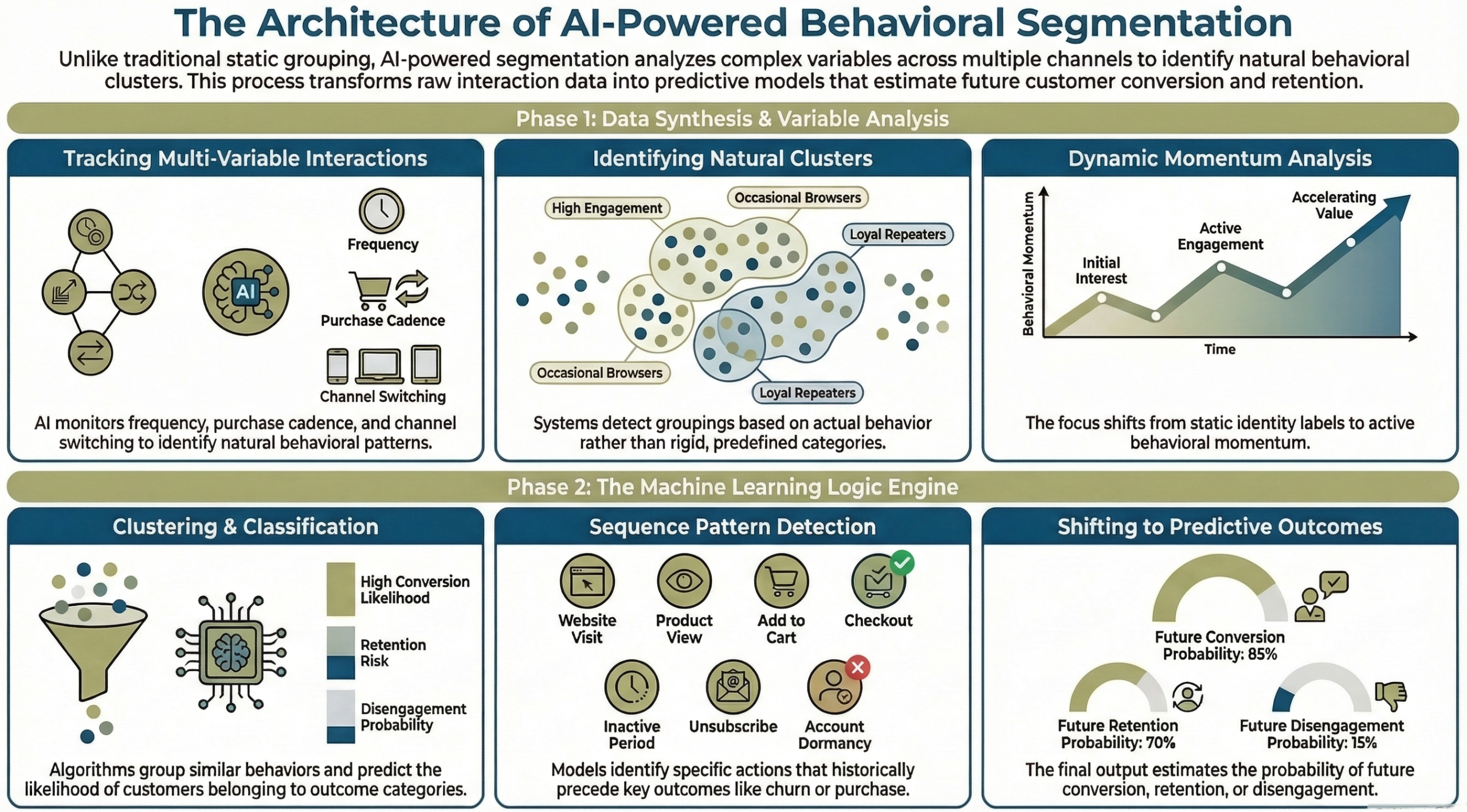
AI-driven segmentation uses machine learning models to detect patterns in customer behavior across multiple variables simultaneously. Rather than grouping customers based on predefined categories, AI identifies natural clusters of behavior within data.
These systems analyze variables such as:
• Frequency of interaction
• Purchase cadence
• Channel switching behavior
• Engagement intensity
• Response to promotions
• Lifetime value trends
Instead of describing the past, predictive segmentation estimates the probability of future outcomes—such as conversion, retention, or disengagement.
Key Analytical Methods
Clustering
Algorithms group customers based on similarity in behavioral patterns without predefined categories.
Classification
Models predict the likelihood that customers belong to outcome categories such as high-value buyers or churn risks.
Pattern Detection
Machine learning identifies sequences of actions that often precede specific outcomes.
Together, these methods allow organizations to identify segments defined by behavioral momentum and predicted outcomes, not static identity labels.
What Data Is Required for Predictive Segmentation?
Successful AI segmentation depends on collecting and structuring high-quality behavioral data. Three categories of variables typically support predictive segmentation.
1. Behavioral Variables
Observable customer actions across channels.
Examples:
• Website visits
• Content engagement
• Product comparisons
• App usage
• Email interactions
These signals indicate intent and decision readiness.
2. Transactional Variables
Economic indicators of purchasing behavior.
Examples:
• Purchase frequency
• Average order value
• Product mix
• Subscription renewal patterns
These signals reveal value and loyalty.
3. Psychographic Variables
Indicators of attitudes and motivations.
Examples:
• Brand perceptions
• lifestyle preferences
• risk tolerance
• personal values
Psychographic data helps explain why customers behave the way they do.
The most effective segmentation models combine all three data types, using behavioral variables as the primary predictive drivers.
How Organizations Operationalize AI Segmentation
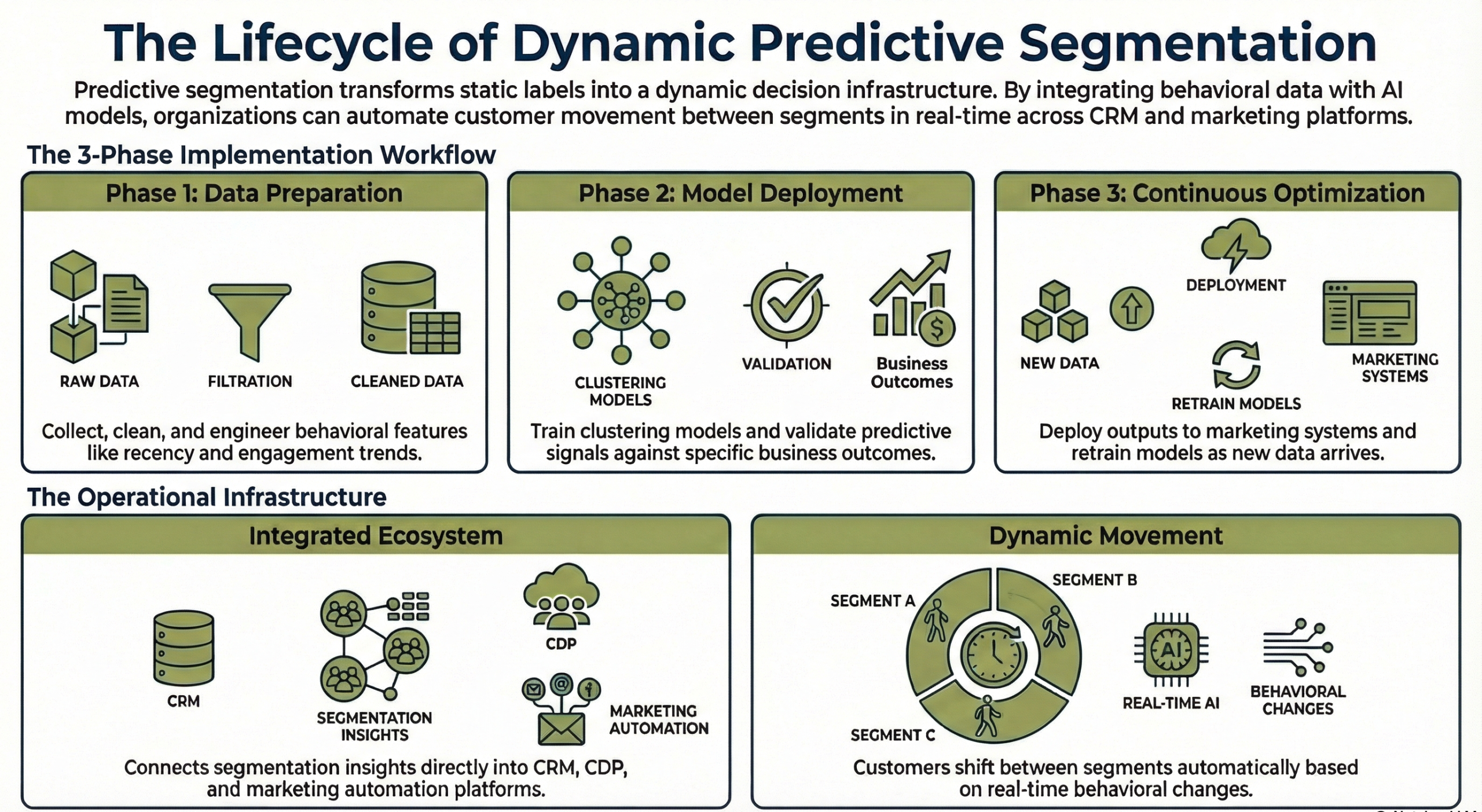
The real value of predictive segmentation emerges when it becomes embedded in operational systems rather than remaining a one-time analytical exercise.
Modern organizations integrate segmentation insights into:
• CRM platforms
• Customer data platforms (CDPs)
• marketing automation systems
• personalization engines
• product analytics dashboards
As new behavioral data arrives, segmentation models update continuously. Customers move between segments dynamically based on changing behavior rather than fixed labels.
Typical Workflow
-
Collect behavioral and transactional data
-
Clean and normalize the dataset
-
Engineer behavioral features (recency, frequency, engagement trends)
-
Train clustering or classification models
-
Validate predictive signals against business outcomes
-
Deploy segmentation outputs within marketing systems
-
Continuously retrain models as new data arrives
This process transforms segmentation from a reporting artifact into a real-time decision infrastructure.
Real-World Example: Preventing Customer Churn with Predictive Segmentation
One of the most practical applications of AI segmentation is early detection of customer churn risk.
Traditional segmentation would detect churn only after customers stopped purchasing. Predictive segmentation identifies warning signals earlier.
For example:
A subscription platform may observe that customers who are about to cancel often display patterns such as:
- declining engagement frequency
- reduced feature usage
- increased support interactions
- shorter session duration
By identifying these patterns early, organizations can intervene with retention strategies such as:
- targeted offers
- proactive customer support
- personalized product recommendations
This proactive approach allows companies to act before revenue loss occurs, dramatically improving retention rates.
Advanced Considerations: Ethical Governance of Predictive Segmentation
As segmentation becomes predictive and automated, organizations must address new governance challenges.
Predictive models influence decisions such as:
- pricing
- marketing prioritization
- service access
- promotional targeting
Without oversight, these systems can unintentionally reinforce biases embedded in historical data.
Responsible governance requires:
- monitoring models for algorithmic bias
- ensuring transparency in segmentation logic
- limiting use of sensitive data variables
- maintaining clear accountability for AI-driven decisions
Organizations that integrate governance into segmentation workflows strengthen long-term customer trust while maintaining analytical accuracy.

Frequently Asked Questions
What is AI-powered marketing segmentation?
AI-powered segmentation uses machine learning to group customers based on behavioral patterns and predict future actions such as purchase likelihood or churn risk.
Why are demographics no longer sufficient for segmentation?
Demographics describe identity but rarely explain decision behavior. Behavioral data provides stronger predictive insight into how customers actually act.
What types of data are most important for predictive segmentation?
Behavioral data, transactional data, and psychographic signals together provide the most comprehensive view of customer behavior and intent.
How often should segmentation models be updated?
Predictive segmentation systems should update continuously as new behavioral data arrives to ensure segments reflect current customer conditions.
Is AI segmentation only useful for large companies?
No. Even small datasets with meaningful behavioral signals can support effective segmentation if structured properly.
Strategic Insight
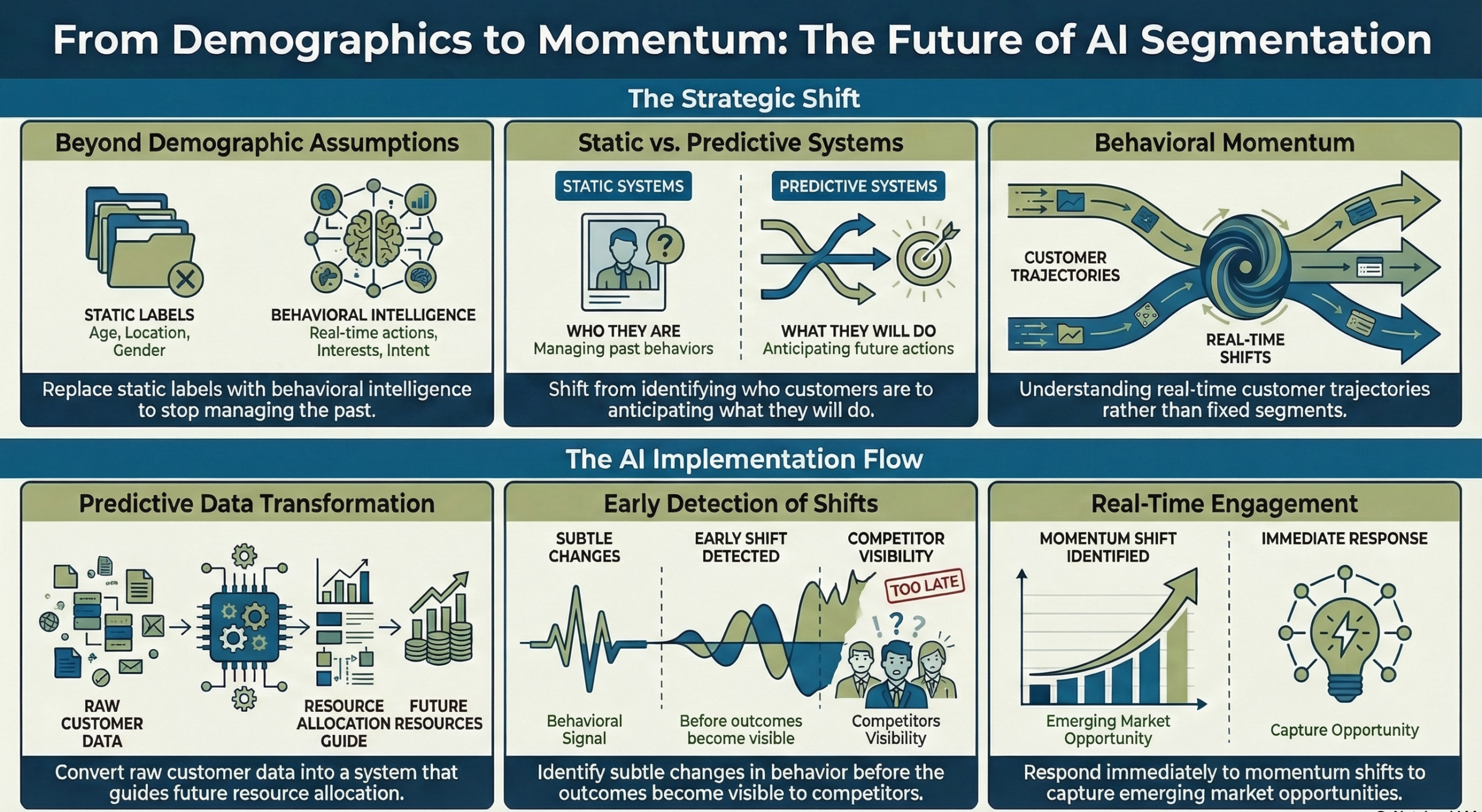
Marketing is entering an era where behavioral intelligence replaces demographic assumptions. Organizations that still rely on static segmentation models are effectively managing the past rather than anticipating the future.
AI-powered segmentation transforms customer data into a predictive system that guides targeting, resource allocation, and engagement timing. As markets become faster and more data-rich, the competitive advantage will belong to organizations that detect behavioral shifts early and act on them before outcomes become visible.
In practical terms, the future of segmentation is not about labeling customers—it is about understanding behavioral momentum and responding in real time.